Best Roulette Betting Systems US – Proven Methods
Last updated: February 2026 • Information purposes only. Gambling involves risk. Set limits and play responsibly.
On this page
- The night I watched a Martingale explode
- Before systems: what roulette really is
- Math, in one short pause
- System-by-system: quick, honest audits
- The table you came for
- So what does move the needle?
- Bias and myths: a short detour
- A quick checklist before you try anything
- FAQ, fast and frank
- Bottom line
- Notes on method and trust
The night I watched a Martingale explode
Ten minutes. That was all it took. A player next to me kept saying the same line between spins: “I’ll just double till I win.” He started at one chip on red. Lost. Two on red. Lost. Four. Lost again. The dealer kept the pace. Chips clicked. People cheered on a side bet. Eight spins later he faced the table max. One more loss and there was no “double” left. He stared at the felt like it had changed the rules on him. It hadn’t.
In roulette, the drama comes fast, but the math never moves. Systems change how your bankroll rises and falls. They do not change what the game pays back.
Before systems: what roulette really is
Many betting systems sell a feeling. They promise control. They look neat on paper. They ride our bias to trust the last few spins more than the long run. This is why you see them shared in forums and videos. They look like a plan. But a plan is not an edge.
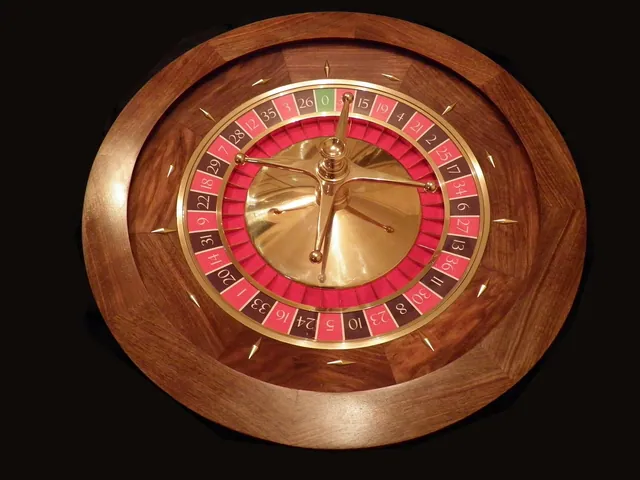
If you want a short, clean look at what roulette is and how the wheel works, read the Britannica page. One ball. A fixed number of pockets. Payouts set by the casino. That’s the frame.
Context matters. Wheel type (American has two zeros, European one). Rules (French tables have la partage or en prison on even-money bets). Table limits (min and max). Pace of play (spins per hour). The casino edge lives inside these items, not inside a progression. If you enjoy numbers, UNLV’s research posts real-world hold by game and year. It shows how stable house results are over time. See their historical casino win/hold data.
Math, in one short pause
We need one tool: expected value (EV). EV is the average result you get if you could play forever. It is not a guess. It is arithmetic. If you want a calm intro, this is great: expected value explained clearly.
In European roulette, the house edge on even-money bets is about 2.70%. In American, it is about 5.26% because of the extra zero. Wizard of Odds keeps the core figures tidy: see house edge for American vs European roulette. A bet progression does not change these numbers. It shifts when losses hit you. Not if.
What breaks systems is not the average spin. It is variance. Long runs of reds or blacks happen. A system that “wins small, often” will stack tiny gains, then give them back in one rare but large drawdown. This has been a theme in gambling math for decades. Edward Thorp wrote about it with crisp logic; see Thorp’s classic on gambling math.
System-by-system: quick, honest audits
Flat betting
The idea: bet the same size every spin. No changes.
Example: 100 spins at 1 unit each on red/black. You will likely end a few units up or down, with swing in the middle. There is no cliff. But EV stays negative.
Good: simple, low stress. Bad: still −EV. No “catch up” runs to bail you out.
Verdict: Least harmful way to play. Still a loss in the long run.
Martingale
The idea: double after each loss to win back all past losses plus one unit on the next win.
Example: 1, 2, 4, 8, 16, 32, 64, 128, 256… With a 1–256 table, the ninth loss forces a cap. The series cannot complete. One bad streak wipes many small wins.
Good: many small wins feel nice. Bad: a rare long loss streak erases them and more. Table max and your bankroll kill the “in theory” part.
Verdict: Bankroll trap. Fast and loud when it fails.
Reverse Martingale (Paroli)
The idea: press after wins, not losses. Often reset after 2–3 wins in a row.
Example: You win 1, press to 2, win, press to 4, then lock a profit and reset. Feels great on a heater. But you hit resets a lot. Cold runs bleed you slowly.
Good: caps loss by not chasing. Bad: variance is high; most streaks are short.
Verdict: Win-streak chaser. Fun, but swingy and still −EV.
D’Alembert
The idea: add 1 unit after a loss, subtract 1 after a win. A “balance” story.
Example: L (bet 1, lose), next 2; W (win), back to 1; L, up to 2; L, up to 3, and so on. Long loss runs still build stakes and pain.
Good: feels smooth. Bad: slow grind down, with deeper holes on runs.
Verdict: Feels safe. It isn’t. Edge still wins.
Fibonacci
The idea: move forward in the Fibonacci sequence on a loss; back two steps on a win.
Example: 1, 1, 2, 3, 5, 8, 13, … The bet size creeps up. You still face a cliff on long cold streaks.
Good: slower than Martingale. Bad: the tail risk remains.
Verdict: Slow Martingale in disguise. −EV.
Labouchere (Cancellation)
The idea: write a list of small numbers (like 1‑1‑2‑3). Bet the sum of first and last. On a win, cross them out. On a loss, add the lost bet to the end.
Example: If you lose early, your list grows. Bets rise. One extended cold patch makes huge bets appear fast.
Good: gives a sense of “plan.” Bad: complexity hides risk until it hits.
Verdict: Grinds… until it doesn’t. High tail risk.
Oscar’s Grind
The idea: aim to win 1 unit per “series.” After a win, increase the next bet by 1 unit, but never above the amount needed to end the series +1. After a loss, keep the same bet.
Example: Loss-loss-loss (stay at 1), then win (go to 2), lose (stay at 2), win (go to 3), and so on, until you reach +1 for the series and reset.
Good: drawdowns feel mild at first. Bad: streaks stretch series for a long time; table max can still bite.
Verdict: “Safe until it isn’t.” Still −EV.
Kelly criterion (why it doesn’t fit)
Kelly tells you how much to bet when you have a real edge. In roulette, you don’t. So Kelly says: bet zero. That’s the right math in a −EV game.
Verdict: Not for roulette. No edge, no Kelly.
The table you came for
I ran simple simulations to get rough ranges (100,000 spins per system; European wheel 1/37; even-money bets; table min 1, max 256; starting bankroll 1,000 units). These are ballpark figures to compare risk shapes, not promises. Your results will vary with limits, speed, and luck. One more spin can swing a session a lot. Read the verdicts, not only the numbers.
| Flat betting | No change | None | N/A (no escalating bets) | ≈ 40–60 units | Low | Low | Least harmful; still −EV |
| Martingale | ×2 after loss | None | Not realistic under 1–256 cap | Often full bankroll on long streak | Low | High | Bankroll trap |
| Paroli (Reverse Martingale) | ×2 after win (reset after 2–3 wins) | None | ≈ 100 units | ≈ 70–90 units | Low–Med | High | Volatile streak chaser |
| D’Alembert | +1 after loss, −1 after win | None | ≈ 200 units | ≈ 80–120 units | Low | Med | Feels smooth; still −EV |
| Fibonacci | 1‑1‑2‑3‑5‑8… after losses | None | ≈ 300 units | ≈ 120–180 units | Med | Med–High | Slow, but tail risk remains |
| Labouchere | Sum of ends; add loss to list | None | ≈ 400 units | ≈ 200–300 units | High | High | Grinds until a cold run |
| Oscar’s Grind | +1 after win (cap at +1 series goal) | None | ≈ 200 units | ≈ 80–120 units | Med | Med | “Safe until it isn’t” |
| Kelly criterion | Fraction of edge (needs +EV) | Not applicable | N/A | N/A | High | Med | No use in −EV roulette |
Note: These are rough ranges to show risk shapes under one set of limits. Change the wheel, rules, or limits, and the shape shifts, but the edge remains.
So what does move the needle?
Rules, not progressions. That’s the core.
- Prefer European or French wheels. One zero is better than two. Some French tables offer la partage or en prison on even-money bets. That halves the loss on zero or “holds” it till the next spin. It trims the edge.
- Know your table limits. Progressions grow fast. A 1–256 cap means a Martingale hits a wall on a 9th loss in a row. This wall is the point where “in theory” ends.
Online play has extra checks. Reputable sites follow tech rules on fairness and testing. If you want the baseline, read the UKGC remote technical standards.
Random number generators (RNG) for online roulette must pass audits. See the lab side in the GLI-19 interactive gaming systems standard.
And if you like the math behind “random,” there’s the NIST randomness test suite used in many areas to check random bit streams.
Pace matters too. More spins per hour mean the house edge shows up faster. Fewer spins slow the grind. Slower is kinder to a small bankroll.
Bias and myths: a short detour
Wheel bias and visual ballistics used to tempt pros. In the 1980s and 1990s, some wheels had tiny flaws. Today, modern wheels, checks, and sensors make that path close to zero for normal players. It is not the edge you are looking for.
A bigger trap is inside your head: the gambler’s fallacy. We want to think a string of blacks makes red “due.” It does not. Each spin on a fair wheel is fresh. See evidence on the gambler’s fallacy from behavioral research for a clear view.
A quick checklist before you try anything
- Pick the wheel: European or French if you can. Look for la partage or en prison on even-money bets.
- Read the limits: table min and max; max payout per spin; buy-in rules. Check how fast the table runs.
- Decide your session plan: number of spins, stop‑loss, and stop‑win. Write them down. Keep them.
- Size your bets: a tiny flat bet hurts less over time. Systems that grow bets need deep pockets. Be honest about your bankroll.
- Test first: use free demo wheels or a tiny stake to see how swings feel. Practice leaving on time.
- Verify site standards if online: license, game provider, test labs, and fair terms. If you don’t want to check all details from scratch, you can scan available payment options for bettors, rule notes, and speed points in curated reviews.
- Protect yourself: if you feel tilt, walk. If a loss hurts, shrink your bet or stop.
- Keep help close: here is support if gambling stops being fun.
FAQ, fast and frank
Can any betting system beat roulette long‑term?
No. Not without a real edge from rules or a broken game. Progressions do not change expected value.
Why do casinos allow systems at the table?
Because systems do not change the edge. They change how your losses arrive. They also make action faster, which suits the house.
Are betting systems illegal?
No. Most are allowed. Cheating (past posting, device use) is not. Counting is not a thing in roulette like it is in blackjack.
European vs American roulette: which should I pick?
European. One zero. Lower edge. If you see French rules like la partage or en prison, better still.
Does la partage really help?
Yes. It halves your loss on zero for even-money bets. That trims the edge. Still not a positive game.
Are online RNG wheels fair?
On licensed sites with tested games, yes. Look for lab certs and standards like GLI and NIST‑style tests in supplier docs. Also see the UKGC tech rules linked above.
How big a bankroll makes Martingale “safe”?
No bankroll makes it safe when there is a table max. With no cap and infinite funds, it is a math toy, not real life. In the real world, streaks and limits end it.
Bottom line
What works: picking the right wheel and rules; knowing your limits; playing slow; flat or tiny bets; leaving on time. What does not: trying to “fix” a negative edge with a bet progression. The edge lives in the game’s design, not in your pattern. Play for fun, not income. Set clear stops. If you want a north star for safe play, read the responsible gaming principles and make them yours.
Notes on method and trust
- Wheel and limits used in examples: European wheel (1/37), even‑money bets, table min 1, table max 256, starting bankroll 1,000 units.
- Sim runs: 100k spins per system to get rough percentiles. Figures above are rounded ranges to show risk shape, not exact forecasts.
- No system advice here is a promise of profit. Results vary. The house edge remains unless rules lower it.
Share
Read next
 Safe Casinos
3 Fishing Games That Will Keep You entertained In Online Casinos
If you’re looking for a fun and entertaining way to spend your time in an online casino, then you should definitely check out some of the fishing games that are available.
16 September 2026
Safe CasinosHow to deposit at an Online Casino – Fast and Safe
If you want to play real money games on the Internet, then at a certain point you’ll have to make a deposit at an online casino.
16 September 2026
 Safe Casinos
Jilibet Casino: Your Chance to Win Big and Live Life to the Fullest
Welcome to the exciting world of Jilibet Casino, where dreams can come true and you have the opportunity to win big.
23 February 2025