Pachinko And Online Slots
When it comes to gambling laws, Japan treats pachinko and online slots very differently. While a player of a Japanese pachinko machine receives prizes to trade for cash at a different location, the winnings of an online slot are paid directly into a player’s cash account.
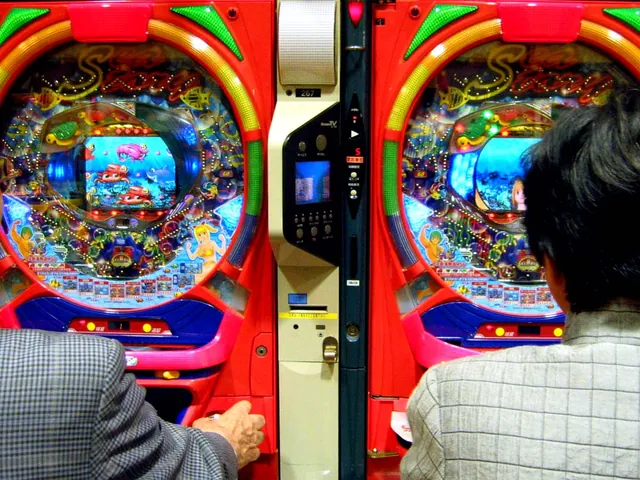
This distinction shapes both the legal and practical experience of playing each type of game in Japan.
In Entertainment-Law Limbo
In Japan, pachinko is not classified as ordinary gambling. Instead, it falls under the entertainment-business category.
According to Japanese law, an establishment can legally operate pachinko machines as long as the parlour never directly pays out cash.
The legal argument for pachinko rests on the fact that cash never changes hands inside the parlour. A standard pachinko parlour uses a three-shop system. First, a player inserts money and wins steel balls on the machine. Next, they exchange those balls for prizes at the parlour’s counter. Then, a separate shop nearby buys those prizes from the player for cash.
A Grey Legal Zone
These rules create a complex legal grey zone — often characterized as a loophole — that has been widely scrutinized and described as a “legal grey zone” in the media.
Minimum Age
In Japan, the minimum age to enter a pachinko parlour is 18. By comparison, the national lottery and most public betting systems set the minimum age to 20.
The Pachinko Cousins
Pachislot machines, which are more closely related to slot machines, are found in the same parlours as pachinko machines under the same regulatory environment.
The machines are regulated under Japanese entertainment-business rules.
However, their construction is more similar to that of a poker machine than a pachinko machine.
How An Online Slot Works
In contrast to pachinko, an electronic online slot pays winnings directly to the player— usually into their player account as cash balance, rather than via a prize or coupon.
A random number generator determines the outcome of each spin.
The slot operator, typically licensed in a different country, publishes the long-term return on a percentage of total wagers, usually a percentage of players' stakes, called a return to player, or RTP.
Gambling Risk
This distinction – direct payout and foreign operator – is crucial for a Japanese player. Because online slots are typically licensed outside Japan, playing them can fall under Japanese gambling laws.
Article 185 punishes gambling with a fine of no more than 500,000 yen, but includes an exception for “momentary entertainment.”
In simpler terms, a pachinko player in a Japanese parlour can exchange prizes for cash with some legal protection, while a Japanese player of an online slot may be subject to criminal penalty.
Read next
 Guides
Online Casinos And Japanese Law
Betting from inside Japan is an offence for the player, and since 25 September 2025 advertising overseas casino sites is banned too. What remains legal.
September 18, 2026
 Guides
Tax On Gambling Winnings
Winnings count as temporary income: total, minus the expenses that produced them, minus the 500,000 yen deduction, then halved. The filing threshold and the two exempt cases.
September 18, 2026
 Guides
Betting That Japan Allows
Horse, bicycle, motorboat and auto racing, the football lottery and the national lottery — who runs each, where they are sold and how the winnings are taxed.
September 18, 2026