Craps for New Players: Understanding Bets & Table Etiquette
Learn the game fast. Make smart bets. Be a good table mate. Play safe and legal.
On this page
- Quick Start: How a Craps Round Works in 60 Seconds
- The Table at a Glance: Layout and Roles
- Step-by-Step: Your First Turn at the Craps Table
- The Smart Core Bets (With Real House Edges)
- Bets Beginners Should Avoid (and Why)
- Bankroll Basics and Simple Starter Strategy
- Table Etiquette: How to Be a Welcome Player
- Online vs. Live Craps: Practicing Safely (and Legally)
- Responsible Gambling and Legal Notes
- FAQ
- Glossary: Simple Craps Terms
- Sources and Further Reading
- Quick Start: How a Round Works
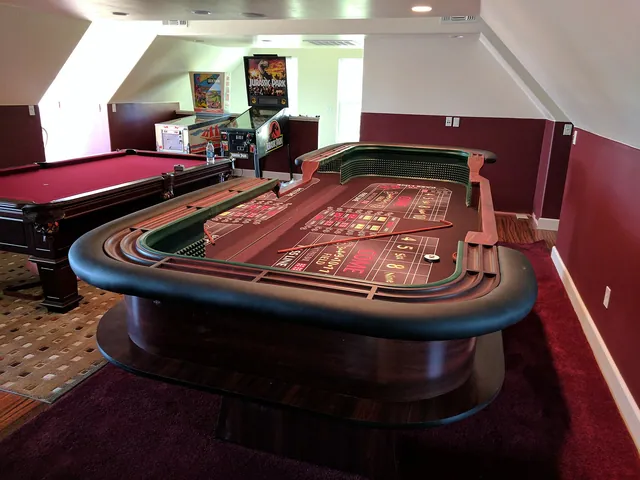
- The Table: Layout and Roles
- Your First Turn: Step by Step
- The Smart Core Bets (with real house edges)
- Bets to Avoid (and why)
- Bankroll Basics and Simple Strategy
- Table Etiquette
- Online vs. Live Craps: Practice Safely
- Responsible Gambling and Legal Notes
- FAQ
- Glossary
- Sources and Further Reading
Craps can look scary. The table is big. People shout. Chips move fast. But the core is simple. Focus on a few good bets. Learn basic rules. Follow easy manners. This guide shows you how. It uses plain words. It gives real odds and clear tips. No hype. No tricks.
Quick Start: How a Craps Round Works in 60 Seconds
Here is the flow of one round:
- The shooter (a player) rolls two dice. This first roll is the “come-out roll.”
- If the come-out is 7 or 11, the Pass Line wins. If it is 2, 3, or 12, the Pass Line loses (this is “craps”).
- If it is 4, 5, 6, 8, 9, or 10, that number becomes the “point.”
- Now the shooter rolls again and again:
- — If the point rolls before a 7, Pass Line wins.
- — If a 7 rolls before the point, Pass Line loses. This is “seven out.”
- Then the dice move to the next shooter.
That is the core loop. Most smart bets use this loop. If you want a deeper rules page with math, see the well-known guide at Wizard of Odds: Craps overview and odds.
The Table at a Glance: Layout and Roles
The layout has clear zones:
- Pass Line and Don’t Pass are around the edge.
- Come and Don’t Come boxes sit near the center.
- Place bet boxes mark the numbers: 4, 5, 6, 8, 9, 10.
- The center “proposition” area has one-roll bets and hardways. These are risky.
Who works the table:
- The stickman moves the dice with a stick and calls the roll.
- Two dealers take bets and pay wins.
- A boxman or floor supervisor watches for fairness and cash.
Basic manners start here: listen to the dealers, keep hands out when the stickman says “dice out,” and place chips where a dealer can reach them. For a quick look at a standard table, you can also check a casino guide page like How to Play Craps by Caesars.
Step-by-Step: Your First Turn at the Craps Table
- Buy in: wait for a roll to end. Put cash on the layout. Say “change please.” Do not hand money to a dealer.
- Place your first bet: for a start, put a chip on the Pass Line. If you like to bet against the shooter, use Don’t Pass.
- Point set: if a point is set (4, 5, 6, 8, 9, 10), take “odds” behind your Pass Line. This is the best add-on bet in the casino. More on odds below.
- When you want to leave, say “color up” so the dealer swaps small chips for larger chips.
- Tipping (a “toke”): if service is kind, place a small bet for the dealers or give a chip to them. It is polite, not a must.
Want to read a formal rule set and game oversight info? See the Nevada Gaming Control Board and the UK Gambling Commission.
The Smart Core Bets (With Real House Edges)
These bets are simple. They have low house edge. They help your bankroll last.
Pass Line and Don’t Pass
- Payout: 1:1.
- House edge: Pass Line ~1.41%. Don’t Pass ~1.36% (a bit lower).
- Come-out roll: Pass wins on 7 or 11; loses on 2, 3, 12. Don’t Pass wins on 2 or 3; pushes on 12 in most casinos; loses on 7 or 11.
- Pass wins on 7 or 11; loses on 2, 3, 12.
- Don’t Pass wins on 2 or 3; pushes on 12 in most casinos; loses on 7 or 11.
- After a point: Pass wins if point repeats before 7. Don’t Pass wins if 7 rolls before the point.
- Pass wins if point repeats before 7.
- Don’t Pass wins if 7 rolls before the point.
- Pass wins on 7 or 11; loses on 2, 3, 12.
- Don’t Pass wins on 2 or 3; pushes on 12 in most casinos; loses on 7 or 11.
- Pass wins if point repeats before 7.
- Don’t Pass wins if 7 rolls before the point.
These two bets use the core loop of the game. The math for these edges is well known and tested. See the detailed charts at Wizard of Odds: Craps Basics.
Come and Don’t Come
- These work like Pass and Don’t Pass, but you place them after a point is set.
- House edges are the same as Pass/Don’t Pass.
- They let you build more than one number at once. This spreads risk.
Taking and Laying Odds (0% House Edge on the Odds Part)
- Odds are an extra bet you add behind your Pass or Come bet. You can also “lay odds” behind Don’t Pass/Don’t Come.
- Odds pay “true odds.” The house gives no edge on this part. The base bet still has a small edge, but the total edge drops when you add odds.
- Common table limits: 2x odds, or 3-4-5x odds. With 3-4-5x odds, the overall edge on Pass can drop to about 0.37%. On Don’t Pass it can drop to about 0.27%.
- How payouts work for odds: If your point is 4 or 10, odds pay 2:1. If your point is 5 or 9, odds pay 3:2. If your point is 6 or 8, odds pay 6:5.
- If your point is 4 or 10, odds pay 2:1.
- If your point is 5 or 9, odds pay 3:2.
- If your point is 6 or 8, odds pay 6:5.
- If your point is 4 or 10, odds pay 2:1.
- If your point is 5 or 9, odds pay 3:2.
- If your point is 6 or 8, odds pay 6:5.
Example: You bet $10 on Pass. The point is 6. You take $12 in odds. If 6 hits, you win $10 on Pass plus $12 x (6:5) = $14.40 on odds (most tables pay in units, so you might bet $10 odds to get $12). If 7 hits first, both bets lose. For a deep math proof of true odds, see Ask the Wizard: Craps and a simple dice primer at Khan Academy: Dice probability.
Place Bets: When 6 and 8 Make Sense
- Place 6 or Place 8 pays 7:6. House edge ~1.52%. Good value.
- Place 5 or Place 9 pays 7:5. House edge ~4.00%. Not as good.
- Place 4 or Place 10 pays 9:5. House edge ~6.67%. Worse.
- Big 6/8 (even money) looks easy but is poor. House edge ~9.09%. If you want 6 or 8, Place them, do not use Big 6/8.
You can check a full list of edges and pay tables here: Craps Odds and House Edge Table.
Bets Beginners Should Avoid (and Why)
These bets pay fast but cost you more over time. If you want your money to last, skip them.
- Field bet: often pays even money on most results. House edge is usually ~5.56%. If 12 pays 3:1, the edge can drop to ~2.78%, still worse than Pass or Place 6/8.
- Hardways: Hard 6 or Hard 8 pays 9:1. Edge ~9.09%. Hard 4 or Hard 10 pays 7:1. Edge ~11.11%.
- Hard 6 or Hard 8 pays 9:1. Edge ~9.09%.
- Hard 4 or Hard 10 pays 7:1. Edge ~11.11%.
- Any 7: pays 4:1. Edge ~16.67%.
- Any Craps (2, 3, 12): pays 7:1. Edge ~11.11%.
- Single numbers like 2 or 12 that pay 30:1 have ~13.89% edge; 3 or 11 that pay 15:1 have ~11.11% edge.
- Hard 6 or Hard 8 pays 9:1. Edge ~9.09%.
- Hard 4 or Hard 10 pays 7:1. Edge ~11.11%.
You can enjoy the game more if you avoid the center area. Keep to the sides and to odds. For a full risk map, see Craps side bets explained.
Bankroll Basics and Simple Starter Strategy
Set a budget before you play. Pick a time limit. Never go over both.
- Unit size: keep one base bet at about 1–2% of your total bankroll for the session. If you bring $500, a $5–$10 base bet is fine.
- Starter plan A: Pass Line with one Come bet. Take odds on both when a point sets. This is easy and low edge.
- Starter plan B: Don’t Pass. Lay odds after the point. This has a tiny bit lower edge and a steadier feel. Some players may not like you betting “Don’t.” Stay polite.
- Never chase losses. There is no system that beats the house. Play for fun and time at the table.
For a clear view on responsible bankroll and play tools, see National Council on Problem Gambling and GamCare.
Table Etiquette: How to Be a Welcome Player
- Do not say “seven” once a point is on. Many players feel this is bad luck.
- Buy in between rolls. Keep hands out of the layout when you hear “dice out.”
- Place chips where the dealer can reach them. Speak clearly. Say “Place 6, please” or “Odds on my 5, please.”
- Use one hand to throw the dice. Hit the back wall. Do not slide the dice.
- Do not splash chips into big piles. Stack them neat.
- Keep drinks away from the rail. No spills on chips or felt.
- Be kind to dealers and other players. Tip when you can. Enjoy wins in a calm way. Take losses with grace.
Many casinos post house rules. For a sense of fair play and testing, read about audit standards at eCOGRA and oversight by groups like the New Jersey Division of Gaming Enforcement.
Online vs. Live Craps: Practicing Safely (and Legally)
Online craps can help you learn at your own pace. It is faster. Buttons replace chips. You can start with low limits. You may see two types:
- RNG (random number generator) craps. A computer handles the rolls. Look for test seals and clear RTP.
- Live dealer craps. A video feed shows a real table. Dealers run the game. It feels close to a casino table.
Check that a site is legal in your area. Look for a license from bodies like the UK Gambling Commission, the Malta Gaming Authority, or your state body (for example, the NJ DGE in the U.S.). Make sure the site offers deposit limits, time-outs, and self-exclude tools. For readers in the DACH region who want a vetted list of regulated sites with clear odds and strong player tools, see our independent reviews at Top Casino Bewertungen. We test licensing, fairness, and payout speed.
Note: Some links may be affiliate. We never promise wins. We focus on safety, fairness, and control.
Responsible Gambling and Legal Notes
- Only adults of legal age may gamble. Laws differ by country and state. Check local rules before you play.
- Set money and time limits before you start. Stick to them. Take breaks.
- Do not chase losses. Do not play when upset or tired.
- If you feel loss of control, stop and seek help. You can find support at: NCPG (U.S.) GamCare (U.K.) BeGambleAware Harvard Health: When gambling is a problem
- NCPG (U.S.)
- GamCare (U.K.)
- BeGambleAware
- Harvard Health: When gambling is a problem
- NCPG (U.S.)
- GamCare (U.K.)
- BeGambleAware
- Harvard Health: When gambling is a problem
FAQ
What are the best bets in craps for beginners?
Pass Line or Don’t Pass are best. Add odds when a point is set. Place 6 and Place 8 are fine too. These have low house edge.
What does “taking odds” mean?
It is an extra bet behind your base bet. It pays true odds and has 0% house edge on that part. It lowers your total edge. Take the max you can afford within your limits.
Can I remove a Pass Line bet after a point is set?
No. Pass Line must stay. You can remove odds, but not the base Pass bet. On the Don’t side, you can lower or remove odds, and in some places you can take down the Don’t Come point bet. Ask the dealer. House rules can vary.
What is the difference between a Come bet and a Place bet?
A Come bet acts like a new Pass bet made after the point. It travels to a number, then you can add odds. A Place bet goes straight on a number and wins when that number rolls before a 7. Come bets have lower edge when you add odds. Place bets on 6 and 8 are still decent.
Is saying “seven” really bad etiquette?
Many players think it is bad luck when the point is on. It is not a rule, but it can upset people. Be kind. Use “S-word” or say nothing.
How much should I tip dealers?
Tip what feels right. A common way is a small bet for the dealers on the Pass Line now and then, or a small chip when you color up. Any kind tip helps.
Do dice-setting or “systems” beat the game?
No. Craps is a game of chance. The house edge stays. Skilled toss claims are not proven at a real table. Focus on good bets and fun time.
Glossary: Simple Craps Terms
- Shooter: the player who rolls the dice.
- Come-out roll: the first roll of a round.
- Point: the number set on the come-out roll (4, 5, 6, 8, 9, or 10).
- “Dice out”: dealers call this before the roll. Keep hands clear.
- Pass Line: a base bet that the shooter will make the point.
- Don’t Pass: a base bet that a 7 will come before the point.
- Come / Don’t Come: like Pass/Don’t Pass but made after the point.
- Odds / Lay odds: extra bet at true odds behind Pass/Come or Don’t bets.
- Place bet: a bet on a number to roll before a 7.
- Hardways: a pair like 3-3 (hard 6). Needs that exact pair to win.
- Color up: swap small chips for bigger chips when you leave.
- Toke: a tip for the dealers.
Sources and Further Reading
We rely on tested math and official bodies. Start here:
- Wizard of Odds: Craps (rules, odds, house edge)
- Wizard of Odds: Craps odds table
- Nevada Gaming Control Board
- UK Gambling Commission
- New Jersey Division of Gaming Enforcement
- UNLV Center for Gaming Research
- eCOGRA (testing and standards)
- NCPG: Help and Treatment
- GamCare: Support
- BeGambleAware: Advice
Last reviewed:
Share
Read next
 Online Betting
Wolf777: Diamond Exchange Online Betting ID
Diamond exchange betting is a relatively new trend that’s quickly gaining popularity. What is it? Simply put, it’s placing bets on diamond prices by exchanging diamonds with other bettors.
26 November 2026
Online BettingSites For Betting On Cockfights: What They Should Offer for Safe Playing
Cockfighting sw418 is a popular sport in many countries around the world. It is often considered a barbarous and cruel sport, but that does not stop people from betting on cockfights.
04 September 2026
Online BettingHow to Place a Sports Bet Without Losing Your Shirt
Do you love betting on sports but hate losing your hard-earned money? If so, you’re not alone. Many people enjoy the thrill of betting on their favorite teams, but don’t want to risk too much in case they lose.
18 August 2026